
Most autism services in Arizona are built for children, leaving adults on the spectrum with far fewer places to turn. Our autism and neurodiversity support was built around that exact gap — sensory-aware environments and a team that never asks you to perform neurotypical behavior to be taken seriously.
Autism & Neurodiversity Support
“Understood. Supported. Seen.”
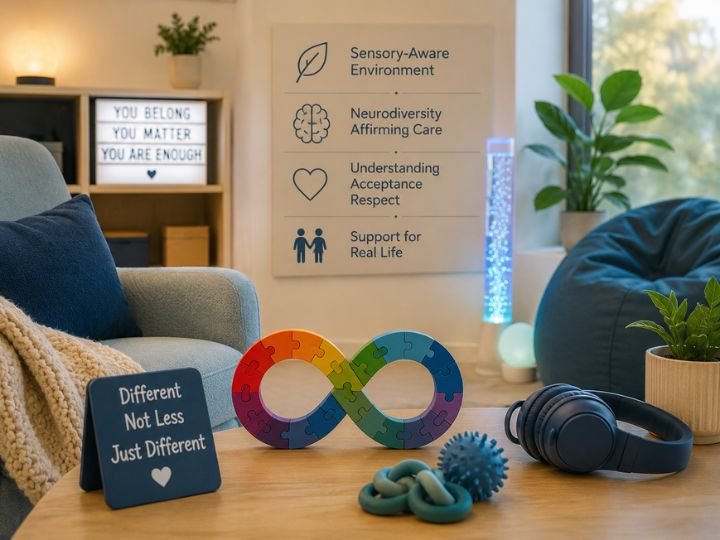
Sensory-aware, adult-focused autism services in a market few providers serve well. Autism is treated as a difference to be understood, not a deficit to correct.

About This Service
Care Built Around You
Individualized, sensory-aware behavioral support
Communication and social-connection support on your terms
Autism transition services for young adults
Coordination with DDD and behavioral health services
Your Care Journey, Step by Step
1
Intake + Assessment
A licensed clinician learns your story, history, and goals before anything else — so the plan starts with you, not a form.
2
Personalized Care Plan
A plan built around what you actually need, coordinated with any other services you're already receiving.
3
Ongoing Care & Check-ins
Consistent sessions, progress check-ins, and coordination across your full care team as things change.
4
Aftercare & Continued Support
Long-term goals, referrals, and community connections to support what comes next.
Is this the right fit for you?
Autistic adults seeking sensory-aware, adult-focused support
Young adults transitioning from pediatric autism services
Individuals with co-occurring autism and developmental disability needs
Families seeking neurodiversity-affirming care
Free Download
Learn more about our autism service
Areas Served
Phoenix
Peoria
Glendale
Mesa
Scottsdale
Care from wherever you are
Not everyone is comfortable receiving care in person. That's why we offer secure telehealth services, so you can access the care you need from the comfort and privacy of wherever you are.
Book Telehealth
Frequently Asked Questions
Do you work with autistic adults, or mainly children?
This service is specifically adult-focused — a group that's genuinely underserved in most autism-related care.
What does "sensory-aware" actually mean during a visit?
It means the environment and the pace of the appointment are built around what actually works for you — lighting, noise, transitions between topics — rather than expecting you to adapt to a standard clinical setup.
Is a formal autism diagnosis required to start?
Call and talk with us about where you are — a formal diagnosis helps in some cases but isn't always a hard requirement to begin a conversation about support.
How is this different from a typical behavioral health appointment?
Autism here is approached as a difference to be understood, not something to "fix" — the whole framing and pacing of support is built around that, not adapted from a generic mental health model after the fact.